
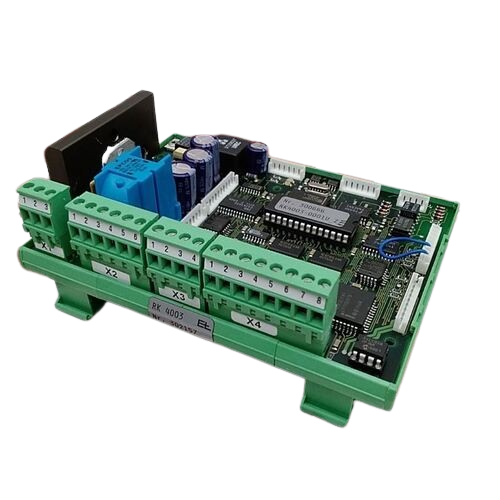
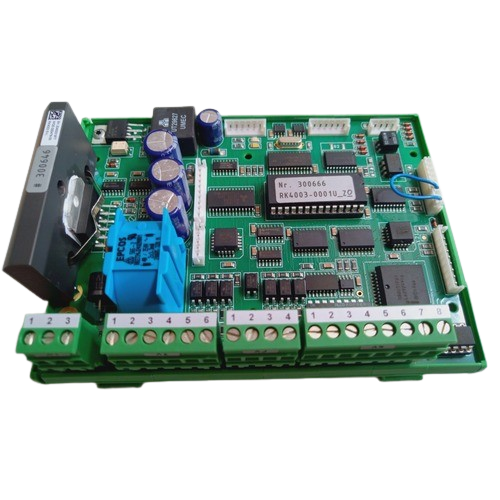
The Erhardt+Leimer RK 4003 is an advanced edge sensor for web guiding systems, delivering accurate alignment for textile, printing, and packaging applications.
The (E+L) Erhardt+Leimer RK 4003 is an advanced edge sensor engineered for web guiding systems, ensuring precise positioning and alignment of web materials across industrial processes such as textile production, printing, and packaging. Its high precision and rugged durability make it a trusted component in modern automation systems.
| Specification | Details |
|---|---|
| Model | Erhardt+Leimer RK 4003 |
| Sensor Type | Optical or ultrasonic detection for web edge alignment |
| Power Supply | 24V DC (typical) |
| Response Time | Fast — suited for high-speed web guiding |
| Material | Industrial-grade, corrosion-resistant housing |
| Operating Temperature | -10°C to +60°C |
| Output Signal | Analog or digital for controller integration |
| Mounting | Compact design for quick installation |
The RK 4003 uses optical or ultrasonic technology to detect the position of a web material’s edge. It emits a sensing signal that reflects off or responds to the material’s presence. When the edge deviates from its set position, the sensor sends a correction signal to a controller or actuator, which adjusts the material’s alignment in real time. This process helps maintain production accuracy and minimizes material waste.